

Roots & Wings Curriculum Framework
At EYES Child Care, we believe that emotionally secure children become happy, capable, resilient adults.
Our Philosophy
At EYES Child Care, we believe that emotionally secure children become happy, capable, resilient adults.
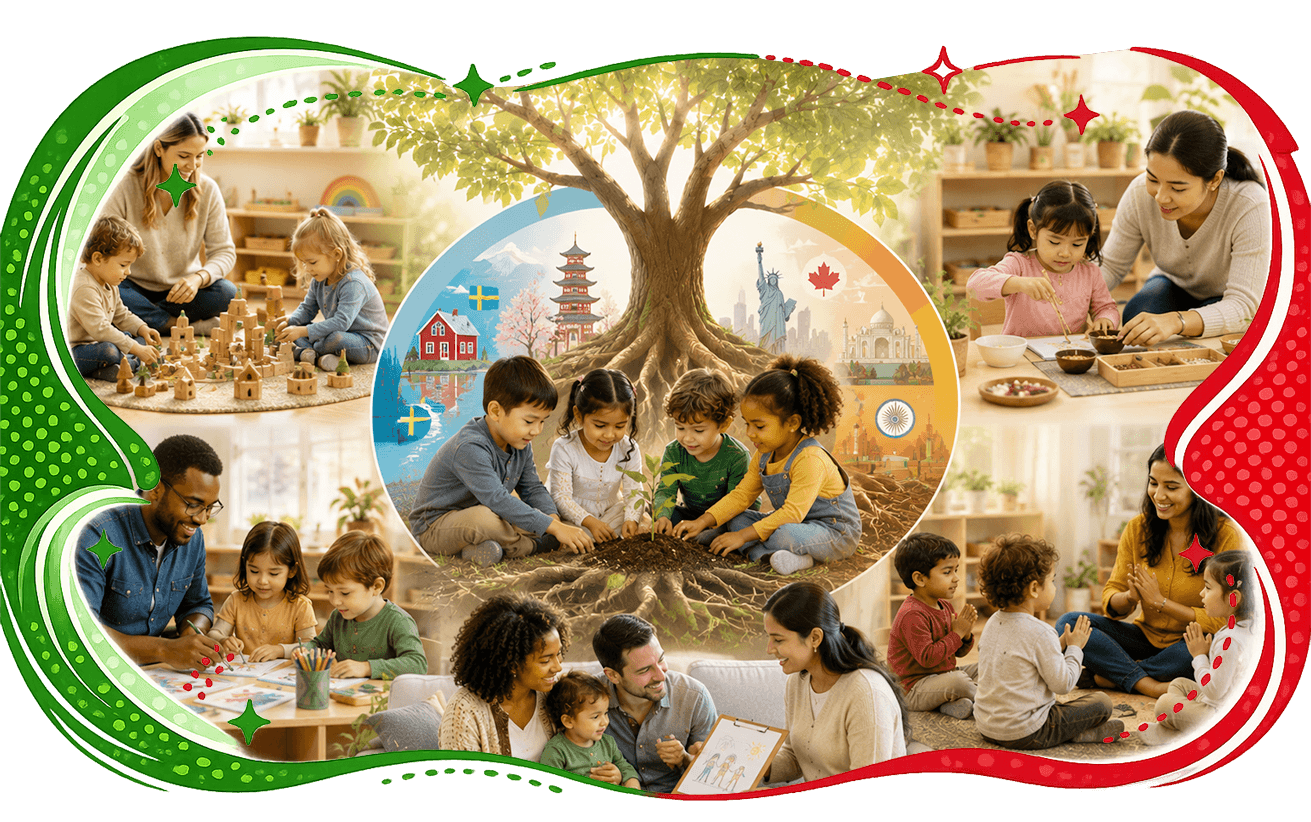
Our Roots & Wings Curriculum is a holistic, child-centered approach that combines the strongest elements of leading early childhood education philosophies from around the world, including Finland, Denmark, Sweden, Iceland, Singapore, Canada, Japan, South Korea, China, and India.
The curriculum is designed to help children develop strong roots of character, values, belonging, honesty, empathy, responsibility, and self-awareness while providing wings of confidence, curiosity, creativity, independence, leadership, and problem-solving skills.
Children are encouraged to explore their full potential, take age-appropriate risks, develop resilience, and become caring individuals who contribute positively to their communities and the world around them.
Our Approach
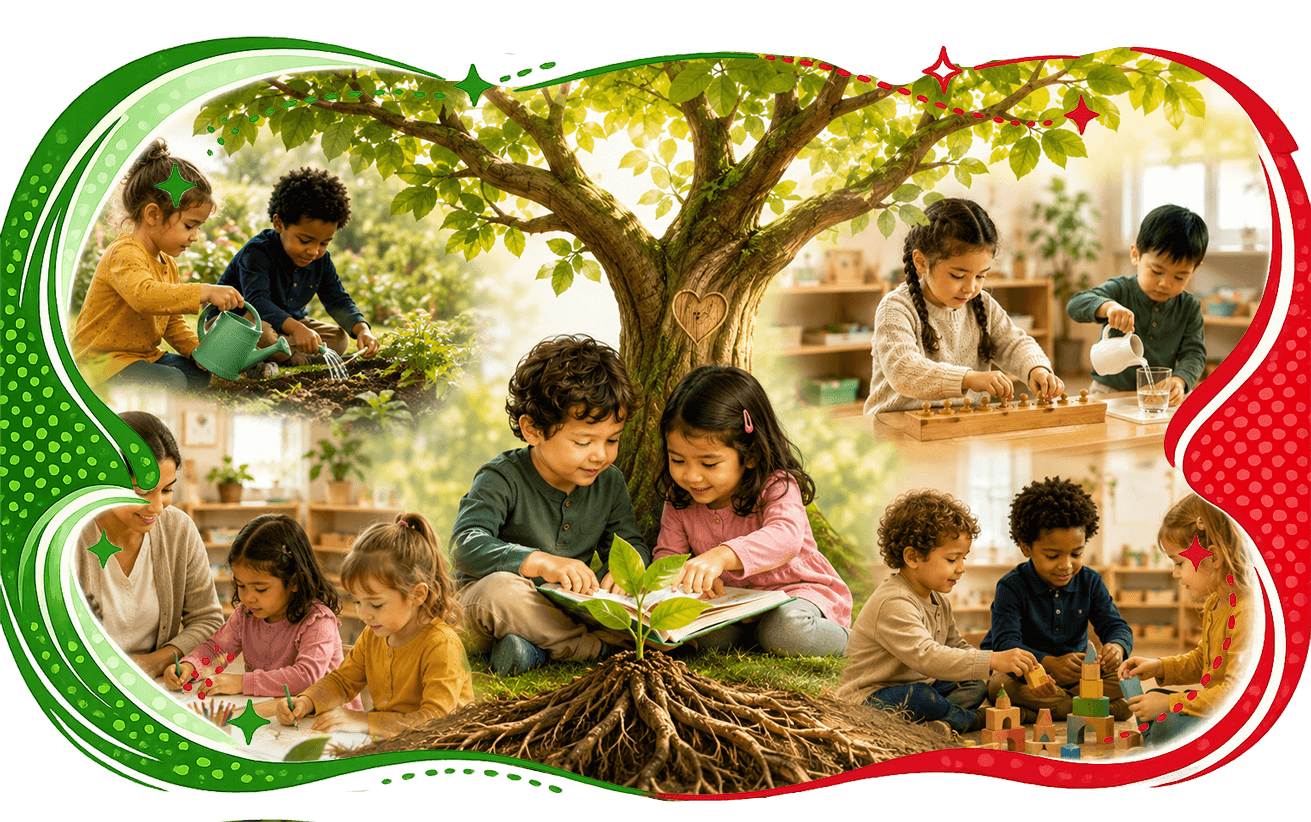
The Roots & Wings Curriculum blends:
- Nordic well-being and play-based learning
- East Asian discipline, perseverance, and responsibility
- North American creativity, inclusion, and inquiry
- Indian values-based and holistic development
Our educators serve as guides, role models, observers, and partners with families. Learning environments are intentionally designed to be inclusive, emotionally safe, culturally responsive, and supportive of healthy brain development.
Curriculum Foundations
The curriculum is built upon eight interconnected areas of development.
Emotional Well-Being
Strong emotional foundations support all future learning. Children learn to identify and express emotions, develop self-regulation skills, build secure relationships, and gain confidence through caring and responsive interactions.
Daily experiences include emotional coaching, calm-down strategies, sharing and turn-taking activities, and predictable routines that help children feel safe and supported.
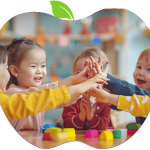
Identity and Self-Esteem
Children develop a strong sense of self through exploration, choice, reflection, and meaningful experiences.
Through play, discovery, sensory activities, outdoor learning, and child-led experiences, children learn that their ideas matter, their efforts are valued, and growth comes through practice and perseverance.
Emotional Well-Being
Strong emotional foundations support all future learning. Children learn to identify and express emotions, develop self-regulation skills, build secure relationships, and gain confidence through caring and responsive interactions.
Daily experiences include emotional coaching, calm-down strategies, sharing and turn-taking activities, and predictable routines that help children feel safe and supported.
Identity and Self-Esteem
Children develop a strong sense of self through exploration, choice, reflection, and meaningful experiences.
Through play, discovery, sensory activities, outdoor learning, and child-led experiences, children learn that their ideas matter, their efforts are valued, and growth comes through practice and perseverance.
Language and Communication
Rich language experiences support communication, literacy, and thinking skills.
Children engage in storytelling, conversations, songs, rhymes, dramatic play, and early literacy experiences. Language development is encouraged through meaningful interactions, with opportunities for multilingual exposure where appropriate.
Self-Regulation, Focus, and Responsibility
Children learn responsibility, patience, perseverance, and independence through consistent routines and daily responsibilities.
Activities encourage children to practice waiting, taking turns, caring for materials, setting simple goals, and developing the confidence to persist through challenges.
Language and Communication
Rich language experiences support communication, literacy, and thinking skills.
Children engage in storytelling, conversations, songs, rhymes, dramatic play, and early literacy experiences. Language development is encouraged through meaningful interactions, with opportunities for multilingual exposure where appropriate.
Self-Regulation, Focus, and Responsibility
Children learn responsibility, patience, perseverance, and independence through consistent routines and daily responsibilities.
Activities encourage children to practice waiting, taking turns, caring for materials, setting simple goals, and developing the confidence to persist through challenges.
Social Skills and Community
Positive relationships are at the heart of learning.
Children learn cooperation, empathy, kindness, respect, and inclusion through collaborative play, group experiences, peer interactions, and community-focused projects.
Values and Character Development
Character education is woven throughout daily experiences.
Children are encouraged to practice gratitude, kindness, honesty, respect, mindfulness, and environmental responsibility. Stories, discussions, and real-life experiences help children develop strong ethical foundations and a sense of purpose.
Social Skills and Community
Positive relationships are at the heart of learning.
Children learn cooperation, empathy, kindness, respect, and inclusion through collaborative play, group experiences, peer interactions, and community-focused projects.
Values and Character Development
Character education is woven throughout daily experiences.
Children are encouraged to practice gratitude, kindness, honesty, respect, mindfulness, and environmental responsibility. Stories, discussions, and real-life experiences help children develop strong ethical foundations and a sense of purpose.
Physical Development and Creativity
Movement and creativity support healthy brain and body development.
Children participate in active play, outdoor exploration, music, art, movement, construction activities, sensory experiences, and open-ended problem-solving opportunities that encourage innovation and imagination.
Future-Ready Thinking Skills
Children are introduced to age-appropriate thinking skills that support future learning in an evolving world.
Through inquiry, experimentation, sorting, patterning, cause-and-effect activities, and questioning, children develop curiosity, logical thinking, adaptability, and confidence as learners.
Physical Development and Creativity
Movement and creativity support healthy brain and body development.
Children participate in active play, outdoor exploration, music, art, movement, construction activities, sensory experiences, and open-ended problem-solving opportunities that encourage innovation and imagination.
Future-Ready Thinking Skills
Children are introduced to age-appropriate thinking skills that support future learning in an evolving world.
Through inquiry, experimentation, sorting, patterning, cause-and-effect activities, and questioning, children develop curiosity, logical thinking, adaptability, and confidence as learners.
Age Group Focus
Infants (0–18 Months)
The infant program focuses on attachment, trust, sensory exploration, and emotional security.
Children are supported through responsive caregiving, nurturing relationships, movement experiences, songs, stories, and sensory activities that encourage early communication and exploration.
Key developmental outcomes include:
- Secure attachments
- Emotional safety and trust
- Sensory exploration
- Early communication skills
- Emerging self-regulation
Infants (0–18 Months)
The infant program focuses on attachment, trust, sensory exploration, and emotional security.
Children are supported through responsive caregiving, nurturing relationships, movement experiences, songs, stories, and sensory activities that encourage early communication and exploration.
Key developmental outcomes include:
- Secure attachments
- Emotional safety and trust
- Sensory exploration
- Early communication skills
- Emerging self-regulation
Toddlers (18–30 Months)
The toddler program emphasizes growing independence, language development, social awareness, and self-help skills.
Children are encouraged to make choices, express emotions, engage in social play, and develop confidence through hands-on exploration and daily routines.
Key developmental outcomes include:
- Independence and self-help skills
- Language growth
- Social awareness
- Emotional expression
- Early problem-solving abilities
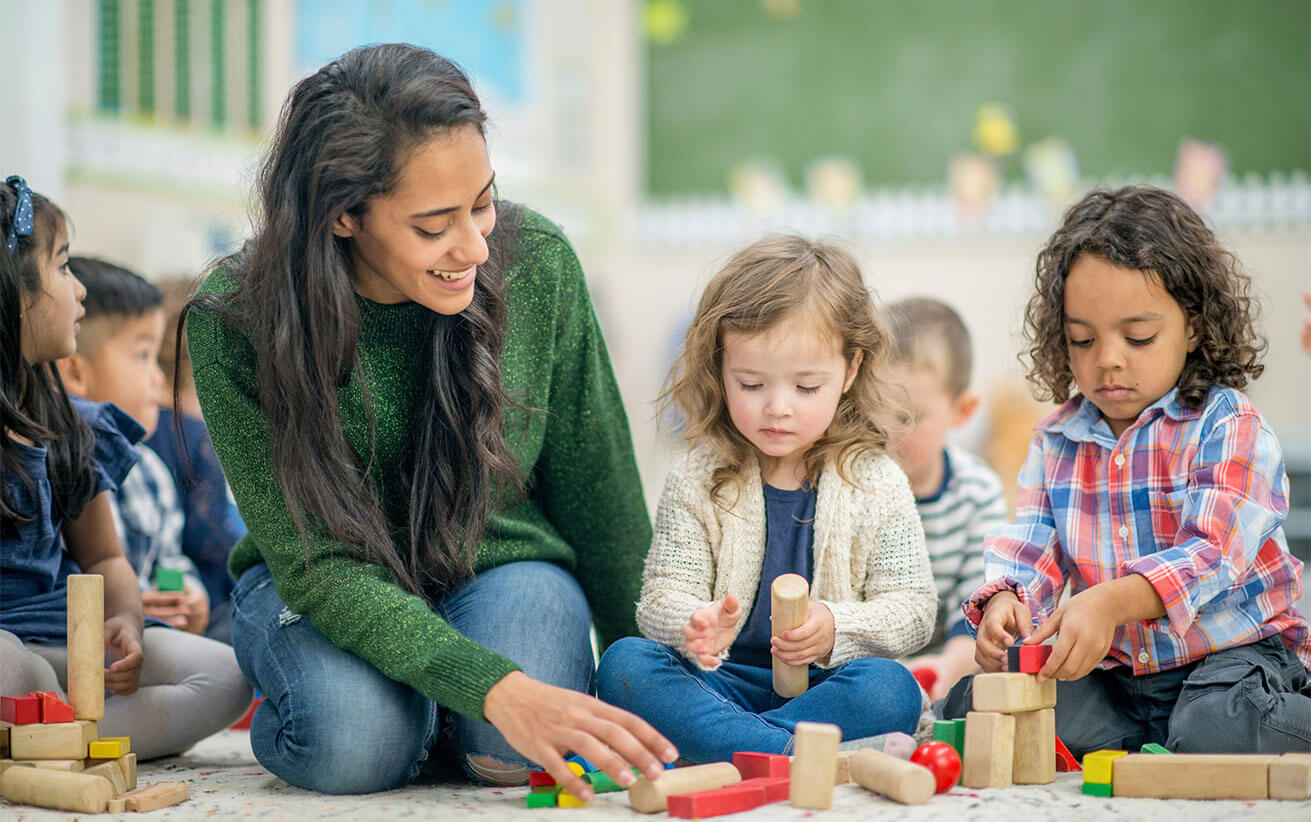
Toddlers (18–30 Months)
The toddler program emphasizes growing independence, language development, social awareness, and self-help skills.
Children are encouraged to make choices, express emotions, engage in social play, and develop confidence through hands-on exploration and daily routines.
Key developmental outcomes include:
- Independence and self-help skills
- Language growth
- Social awareness
- Emotional expression
- Early problem-solving abilities
Preschool (2.5–6 Years)
The preschool program focuses on inquiry, leadership, creativity, ethics, and community participation.
Children engage in collaborative projects, problem-solving experiences, literacy and numeracy foundations, and opportunities to develop responsibility and leadership skills.
Key developmental outcomes include:
- Self-regulation and responsibility
- Critical thinking and problem-solving
- Creativity and communication
- Leadership and confidence
- Community awareness and empathy
Preschool (2.5–6 Years)
The preschool program focuses on inquiry, leadership, creativity, ethics, and community participation.
Children engage in collaborative projects, problem-solving experiences, literacy and numeracy foundations, and opportunities to develop responsibility and leadership skills.
Key developmental outcomes include:
- Self-regulation and responsibility
- Critical thinking and problem-solving
- Creativity and communication
- Leadership and confidence
- Community awareness and empathy
Early Learning Foundations
Early Literacy and Numeracy Foundations
Children develop foundational literacy and numeracy skills through meaningful, play-based experiences.
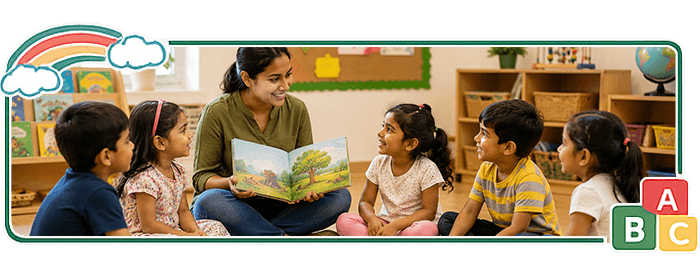
Literacy experiences include storytelling, songs, rhymes, conversations, phonological awareness, letter recognition, early writing experiences, and a love of books and language.
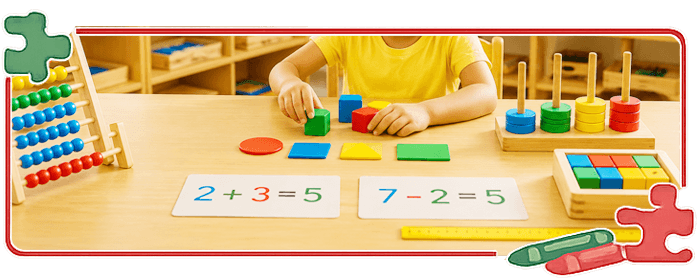
Numeracy experiences include counting, sorting, patterning, shape exploration, measurement, estimation, and real-life mathematical problem-solving.
By age four, children are typically developing:
- Recognition of letters and sounds
- Number awareness and counting skills
- Early writing readiness
- Clear communication skills
- Ability to follow routines
- Confidence as learners
Early Literacy and Numeracy Foundations
Children develop foundational literacy and numeracy skills through meaningful, play-based experiences.
Literacy experiences include storytelling, songs, rhymes, conversations, phonological awareness, letter recognition, early writing experiences, and a love of books and language.
Numeracy experiences include counting, sorting, patterning, shape exploration, measurement, estimation, and real-life mathematical problem-solving.
By age four, children are typically developing:
- Recognition of letters and sounds
- Number awareness and counting skills
- Early writing readiness
- Clear communication skills
- Ability to follow routines
- Confidence as learners
Assessment and Documentation
Children’s learning and development are documented through ongoing observation, reflective practice, portfolios, photographs, educator documentation, and family input.
Assessment focuses on understanding each child’s growth, interests, strengths, and emerging skills rather than measuring performance.
Families are valued partners in the learning journey and are regularly informed about their child’s progress and experiences.
Assessment and Documentation
Children’s learning and development are documented through ongoing observation, reflective practice, portfolios, photographs, educator documentation, and family input.
Assessment focuses on understanding each child’s growth, interests, strengths, and emerging skills rather than measuring performance.
Families are valued partners in the learning journey and are regularly informed about their child’s progress and experiences.
Building Skills for Life, Not Just School
Family Partnership
Strong partnerships between educators and families support children’s success.
We work collaboratively with families to create consistent approaches that promote emotional well-being, curiosity, resilience, and positive development. Families are encouraged to participate in their child’s learning through communication, shared experiences, and ongoing engagement with the program.
Family Partnership
Strong partnerships between educators and families support children’s success.
We work collaboratively with families to create consistent approaches that promote emotional well-being, curiosity, resilience, and positive development. Families are encouraged to participate in their child’s learning through communication, shared experiences, and ongoing engagement with the program.
Preparing Children for Life
In a rapidly changing world, success depends on more than academic knowledge.
The Roots & Wings Curriculum focuses on developing the uniquely human qualities that support lifelong well-being and success, including emotional intelligence, creativity, ethical decision-making, adaptability, curiosity, confidence, leadership, and purpose.
Our goal is to nurture children who are not only ready for school, but ready for life.
Children leave EYES Child Care with strong moral roots, confident wings, the courage to explore, the compassion to care for others, and the skills to contribute positively to their communities and the world.
Preparing Children for Life
In a rapidly changing world, success depends on more than academic knowledge.
The Roots & Wings Curriculum focuses on developing the uniquely human qualities that support lifelong well-being and success, including emotional intelligence, creativity, ethical decision-making, adaptability, curiosity, confidence, leadership, and purpose.
Our goal is to nurture children who are not only ready for school, but ready for life.
Children leave EYES Child Care with strong moral roots, confident wings, the courage to explore, the compassion to care for others, and the skills to contribute positively to their communities and the world.